For anyone whose longest trip is a flat two miles to the shops and back, on a bike that sits in the garage between errands
Shopping a $200 bike against a $600 one? Here is where the money actually goes
Common questions
Rear wheel fails first
Rider weight and pedaling forces concentrate on the rear wheel, so that is where cheap builds loosen and spokes break. Ask what a rear truing costs locally before you buy.
Machined braking surface
A rim with a machined sidewall gives rim brakes a flat, consistent surface to grip. Unmachined rims feel grabby when new and glaze the pads faster.
Dual-pivot versus single-pivot
Dual-pivot calipers apply more even pressure for the same hand effort, which matters most in a sudden stop. The upgrade is one of the cheapest real safety differences between price tiers.
Hold the front brake and rock the bike forward and back. A knock you can feel through the bars usually means the headset is loose or its bearings are already pitted.
The two bikes look close enough in a photograph. Both have a swept-back handlebar, a wide saddle, fenders in the catalog picture, and a frame geometry that puts you upright over flat pavement. The gap between them is almost entirely in parts you cannot see from six feet away, and in labor that happened before the box was sealed. A careful reader can find most of it in twenty minutes with the bike on a stand, or on its wheels in a parking lot, and knowing where to look changes what the price difference means.
The wheel build, which is labor as much as parts
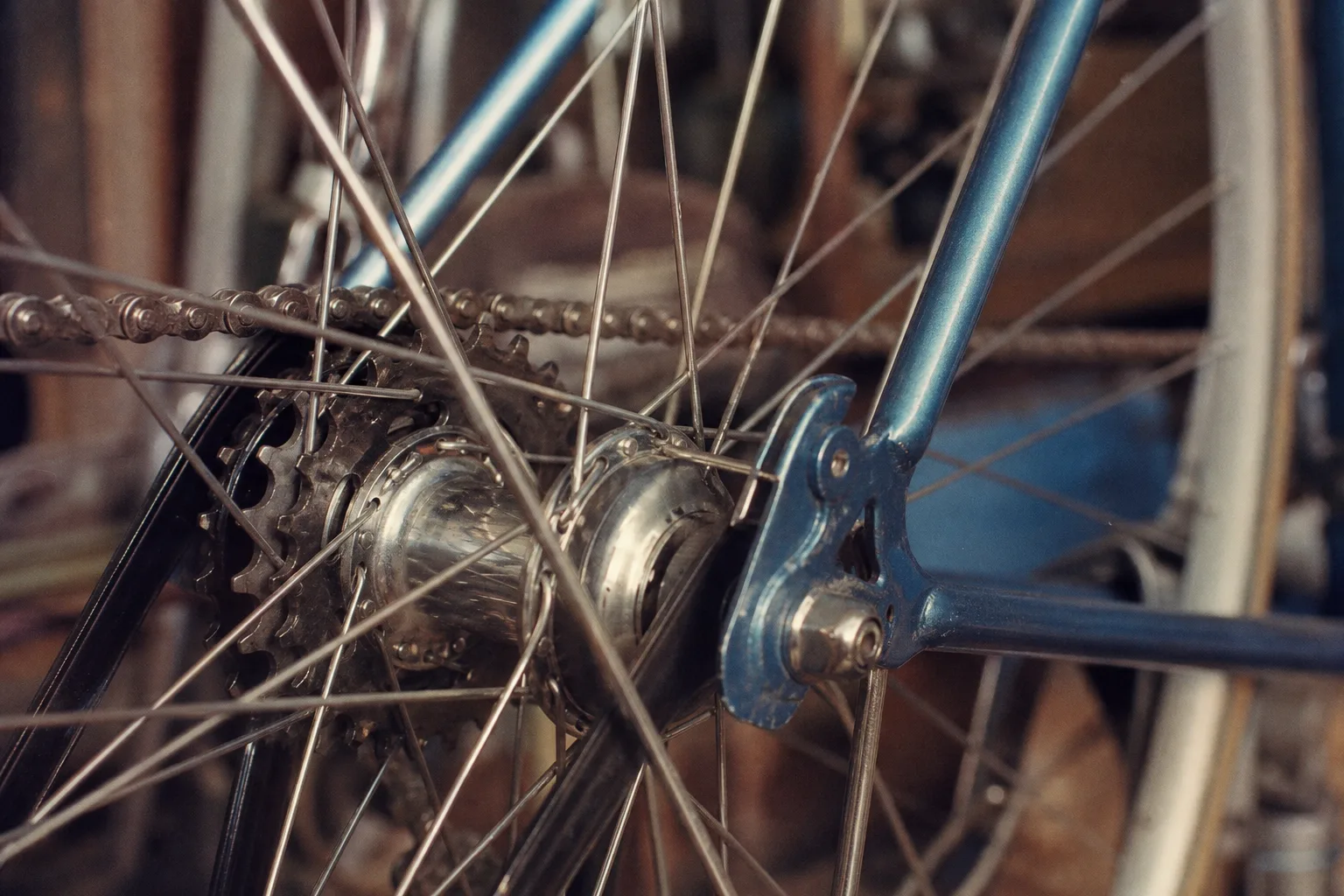
A wheel is a rim, a hub, and spokes tensioned against each other, and the tension is the product. At the low end, wheels come off a machine, get a quick check, and ship. They arrive rideable and go out of true within a few hundred miles, usually on the rear where your weight and the drive forces land. Lift each wheel, spin it, and watch the gap at the brake pad. Then squeeze pairs of spokes: they should feel firm and consistent, not slack in some pairs and tight in others. Uneven tension is the tell, and it predicts your first repair bill.
The money at $600 buys a rim with an eyeleted or thicker spoke bed, stainless spokes that will not rust into their nipples after a salty winter, and a human being who trued and stress-relieved the wheel before it left. On a bike ridden a few flat miles at a time, that difference shows up as years of not thinking about wheels. On the cheaper bike, budget one truing early and accept that a broken spoke is a normal event rather than a defect.
Bearings, and the three places they hide
There are bearings in the hubs, in the bottom bracket where the cranks turn, and in the headset where the fork steers. All three are cheap to make badly. Loose ball bearings in stamped cups, packed thin with grease and adjusted by whoever was fastest that shift, will feel fine for a season and then develop play. Check for it directly: grab the top of each tire and push side to side, feeling for a click at the hub, and hold the front brake while rocking the bike forward and back to feel knocking at the headset. Cartridge bearings and a sealed bottom bracket are a large part of the upcharge, and they are the part that survives sand and coastal air.
Tires and brakes, the two things you notice on the first ride
Tires are where a modest amount of money buys an outsized change. A cheap 26 by 2.0 tire has a thin casing, no puncture belt, no reflective sidewall, and a maximum pressure printed low enough that it rides soft and slow on packed sand. A better tire in the same size runs a supple casing, a Kevlar or nylon breaker under the tread, and a bead that seats without a fight. Brakes follow the same pattern. Single-pivot calipers with hardware-store pads on an unmachined rim will stop you eventually. Dual-pivot calipers, decent pads, and a machined braking surface stop you when a car turns without looking.
Assembly quality, and who touched it before you
The Consumer Product Safety Commission is responsible for the federal requirements bicycles have to meet before they are sold, including how a bike must be presented when it is not fully assembled. That does not mean two bikes got the same care. Ask directly who assembled the one in front of you, whether the shop charges for the build, and whether the first tune-up is included. Then check the small things: cable ends capped, derailleur limit screws set so the chain does not overshoot, brake pads square to the rim, cranks with no wobble, headset snug. Those checks cost nothing and tell you almost everything.
The accessories bill nobody quotes you
Both bikes usually arrive without the things that make a short errand ride work. A rear rack, a basket, full-coverage fenders, a kickstand that does not fold under a loaded basket, a bell, lights front and rear, and a lock worth the bike it protects: that list adds up fast, and it adds up the same whether the bike under it cost $200 or $600. The $600 bike more often includes a rack, fenders, and a dynamo or at least the eyelets and clearance to mount them cleanly, which is worth counting as money already spent rather than a feature.
Price the whole thing out, including the parts you will add in the first month and the repairs you expect in the first year, and the two bikes land closer together than the stickers suggest. Which one wins depends on how many miles you actually ride and how much salt is in your air.